
Common Masonite Siding Problems (And the Best Replacement Options)
Masonite and presswood hardboard siding were widely installed in past decades, but they are notorious for absorbing moisture, buckling, and rotting over time in humid environments. Patching or repainting compromised Masonite is usually a temporary fix. If you are experiencing severe wood rot or water intrusion, explore our full range of durable siding replacement options—including fiber cement, composite, and vinyl — see our full comparison of vinyl siding vs. Masonite—engineered to protect your home permanently.
The Hidden Risks of Masonite Siding: What Every Homeowner Should Know
Popularized in the 1980s and early ’90s as a cost-effective alternative to natural wood, Masonite siding—often called “hardboard”—was once the industry standard for those seeking a premium look without the high price tag. Manufactured from wood fibers, wax, and resins bonded under intense heat and pressure, it promised durability and low maintenance.
Unfortunately, time has revealed significant structural flaws. Today, Masonite is widely known for its susceptibility to moisture and premature failure, leading to numerous class-action lawsuits and a general shift toward more reliable materials. If your home still features hardboard siding, here are the critical issues you may be facing.
1. Structural Failure: Swelling and Rot
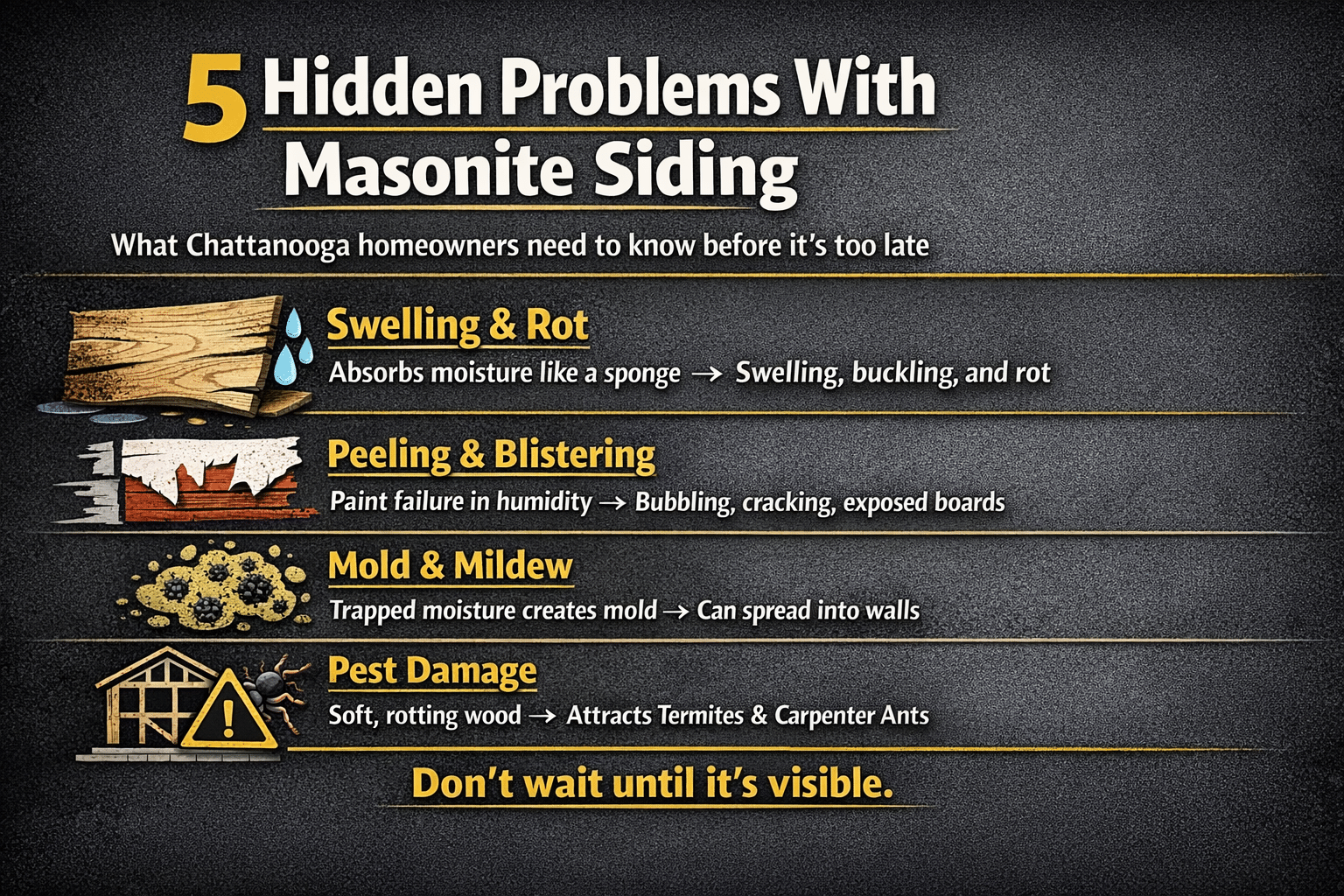
Unlike solid wood or modern fiber cement, Masonite is essentially a composite sponge. Once the exterior paint seal is compromised, moisture infiltrates the inner wood fibers. This causes the boards to swell, buckle, and warp. Because the material is highly absorbent, the moisture becomes trapped, leading to irreversible rot that softens the boards until they lose their structural integrity.
2. Aesthetic Deterioration: Blistering and Peeling
While Masonite was marketed as a “low-maintenance” option, it relies entirely on its paint film for protection. When subjected to the humid climate of the Chattanooga area, the bond between the paint and the composite material often fails. This results in blistering and bubbling, which not only ruins your home’s curb appeal but leaves the vulnerable core exposed to the elements.
3. Health and Safety: Mold and Mildew
Masonite’s ability to retain water makes it a breeding ground for organic growth. Dark streaks or fuzzy patches on your siding are often signs of mold and mildew colonies living within the board. If left unaddressed, this growth can migrate past the siding and into your home’s wall cavities, potentially impacting indoor air quality and family health.
4. Pest Vulnerability
As Masonite rots and softens, it becomes an “easy target” for wood-destroying organisms. Termites and carpenter ants are frequently drawn to the damp, decaying wood fibers. Once these pests established a presence in the siding, they can easily transition into the structural framing of your home, leading to significantly more expensive repairs.
5. Hidden Damage: Bowed Wall Studs
The most dangerous problem with failing Masonite is what you can’t see. When siding remains saturated, it transfers moisture to the wooden wall studs behind it. Over time, this can cause your home’s internal framing to bow or rot. If your home was built without a modern moisture barrier or house wrap, this transfer happens even faster, potentially compromising the stability of your entire exterior wall.
Protect Your Home’s Value
If you’ve noticed soft spots, discoloration, or warping on your exterior, it’s time to move beyond the “quick fix” of a new coat of paint. Modern siding technology offers superior protection, energy efficiency, and a truly maintenance-free lifestyle.
Ready to upgrade? Schedule a free in-home estimate with one of our design consultants to explore durable, high-performance siding alternatives tailored for your home.