
Trex vs. Wood: The 2026 Cost Comparison for Chattanooga
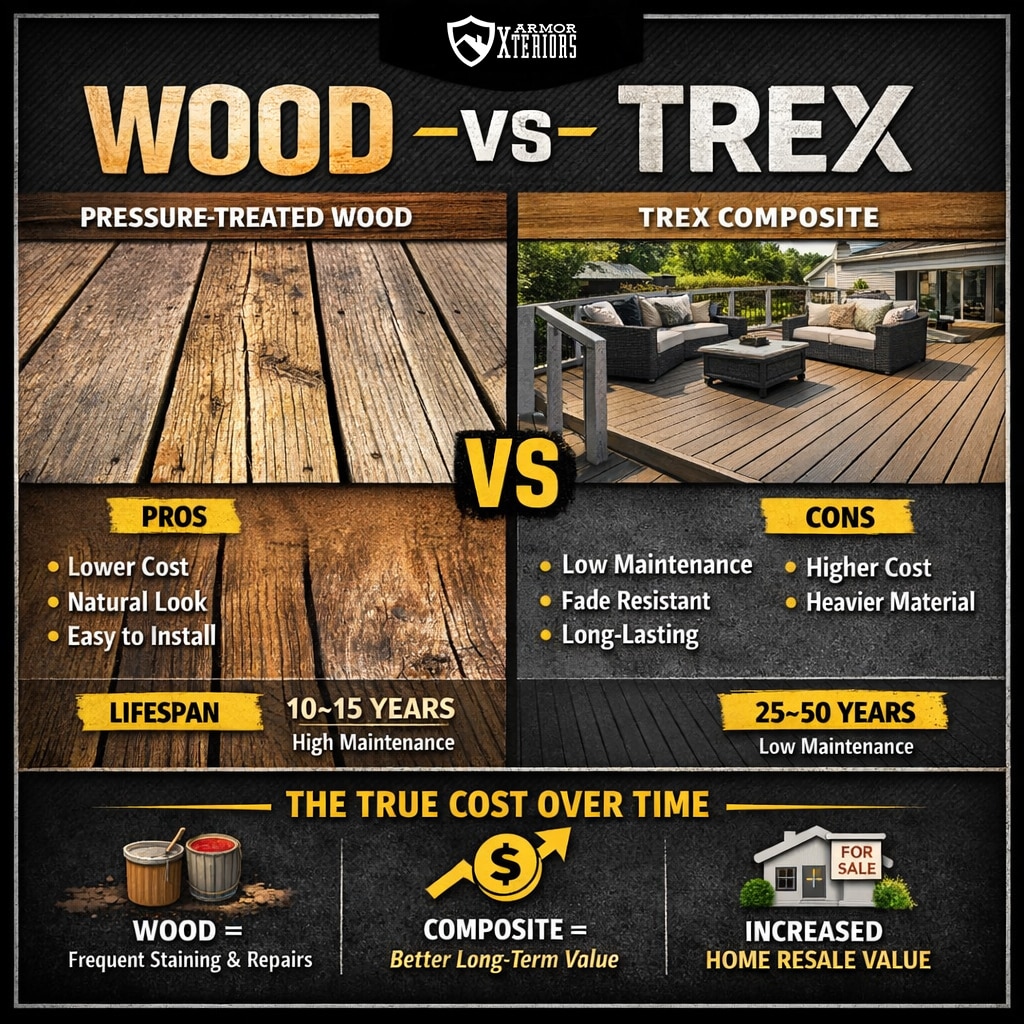
Quick answer: Yes, Trex costs more than wood up front. In Chattanooga in 2026, a mid-size pressure-treated wood deck runs about $28,000–$32,000, and a similar Trex deck runs about $38,000–$45,000, roughly 30–40% more. But wood needs staining every few years ($1,500–$2,500 each time) plus board and structural repairs. Over 20 years, a wood deck typically costs $45,000–$60,000 or more, while Trex stays around $42,000–$45,000. For most homeowners who plan to stay put, Trex ends up costing the same or less.
If you’re planning a new deck in Chattanooga in 2026, one question matters more than any other: Is wood still the better value — or does Trex make more financial sense long term?
Everyone loves the natural look of wood. But very few homeowners love the sanding, staining, sealing and repairs that come with it. That’s exactly why high-performance composite decking has become the dominant choice across Southeast Tennessee.
Designed with lasting beauty, incredible durability and easy maintenance, composite decking eliminates the compromises that traditionally came with outdoor living spaces. And when you compare Trex head-to-head against wood — especially in Chattanooga’s climate — the long-term cost picture becomes clear.
Let’s break it down.
The Chattanooga Climate Factor
Before we even talk dollars, we need to talk humidity.
Chattanooga sees:
- Heavy rain
- High humidity
- Strong UV exposure
- Freeze-thaw cycles in winter
These conditions are tough on natural wood. Over time, pressure-treated lumber, cedar, redwood and even exotic hardwoods like ipe can:
- Rot
- Split
- Swell
- Twist
- Fade
- Crack from insect infestation
Wood decks require annual staining or sealing to fight back against this environment. Skip maintenance for even a couple of seasons, and deterioration accelerates quickly.
Trex, on the other hand, was engineered specifically to handle years of sun, sleet and snow without losing its color or structural integrity.
2026 Upfront Cost Comparison in Chattanooga
Here’s what we’re seeing locally:
Pressure-treated wood deck:
$28,000–$32,000 (average mid-size build)
Trex composite deck:
$38,000–$45,000 (similar footprint)
At first glance, wood appears to save $10,000–$15,000 upfront.
But upfront cost isn’t the full story.
The Maintenance Multiplier
Wood requires:
- Annual staining or sealing
- Periodic board replacement
- Fastener tightening
- Insect monitoring
- Mold and mildew cleaning
Over 20 years in Chattanooga’s climate, homeowners can easily spend:
- $1,500–$2,500 per staining cycle
- Multiple board replacements
- Structural repairs if moisture penetrates framing
That maintenance adds up.
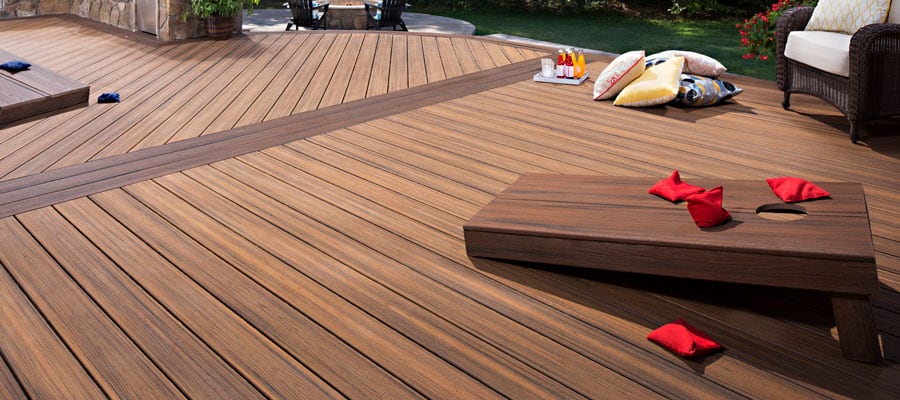
Trex was designed with the beauty of wood — without the maintenance. High-performance composite boards resist fading, staining, mold and splintering. They don’t require sanding, sealing or painting.
And importantly, they’re backed by long fade and stain warranties — not just for a season, but for decades.
The 20-Year Cost Outlook
Let’s estimate conservatively.
Wood (20 years):
- Initial build: ~$30,000
- Maintenance & repairs: $15,000–$25,000
- Potential early rebuild if neglected
- Total potential cost: $45,000–$60,000+
Trex (20 years):
- Initial build: ~$42,000
- Minimal maintenance
- No staining costs
- No splinter repairs
Total potential cost: ~$42,000–$45,000
The gap narrows. In many cases, Trex becomes the lower total-cost option.
What About Other Materials?
Trex vs. Early-Generation Composite
Composite decking has evolved significantly. Early composite boards lacked protective shells, making them susceptible to fading, staining and mildew growth.
Modern high-performance composite boards feature weather-resistant outer shells engineered to maintain color and resist moisture penetration. The difference between early composite and current technology is dramatic — especially in humid Southern climates.
Trex vs. PVC
PVC decking is another alternative to wood. It resists rot and termites, but it comes with trade-offs.
PVC boards:
- Are primarily made from virgin plastic
- Expand and contract more with temperature swings
- Can chalk or fade over time
- May require specialty cleaners to maintain appearance
Trex boards are made with 95% recycled materials and manufactured using eco-friendly processes. They maintain color stability while reducing environmental impact — and no trees are felled in their production.
Environmental Considerations
Wood decks contribute to deforestation and require repeated chemical treatments over their lifespan.
Composite decking, by contrast, utilizes recycled materials and avoids the need for annual chemical staining and sealing. For environmentally conscious Chattanooga homeowners, that matters.
So, Which Is Best for You?
Choose Wood If:
- You prefer the lowest upfront cost
- You enjoy hands-on maintenance
- You love the traditional wood aesthetic
Choose Trex If:
- You want minimal maintenance
- You plan to stay in your home long term
- You want predictable long-term costs
- You value durability in Tennessee’s climate
For many homeowners in Chattanooga, especially those building long-term outdoor living spaces, the financial math increasingly favors composite.
Trex vs. Wood: Frequently Asked Questions
Is Trex more expensive than wood?
Up front, yes. A Trex deck in Chattanooga typically costs about $10,000–$13,000 more than a comparable pressure-treated wood deck, or roughly 30–40% more. Over 20 years, wood’s staining and repair costs usually close that gap or reverse it.
What is the cost difference between Trex and wood over time?
Using 2026 Chattanooga pricing, a wood deck costs about $30,000 to build plus $15,000–$25,000 in staining and repairs over 20 years, for a total of $45,000–$60,000 or more. A Trex deck costs about $42,000 to build with minimal upkeep, for a total of about $42,000–$45,000.
Is Trex cheaper than wood in the long run?
Usually, yes, if you stay in the home for 10 or more years. Trex doesn’t need sanding, staining, or sealing, and it doesn’t rot, splinter, or attract termites the way wood can in our humid climate.
Is Trex worth it in Chattanooga’s climate?
For most homeowners, yes. High humidity, heavy rain, and summer sun are hard on wood. Composite holds up better to moisture and UV and keeps its color without staining.
Does Trex get hot in the sun?
Any decking gets warm in direct summer sun. Lighter colors and Trex boards with heat-mitigation technology stay noticeably cooler. Learn more about Trex heat mitigation.
Can you put Trex on an existing wood deck frame?
Sometimes. If the framing is sound and meets current code and joist-spacing requirements for composite, it can be reused. Many older Chattanooga decks have framing that needs repair or replacement, so we inspect it before quoting.
Still Have Questions?
The right answer depends on your budget, goals and how long you plan to stay in your home.
If you’re weighing Trex vs. wood for a 2026 deck project, schedule a free in-home consultation and get a detailed cost breakdown tailored to your property.
A smart deck decision isn’t just about today’s price — it’s about how that deck performs for the next 20 years.